Introduction
Choosing the right yarn is one of the most important decisions in textile manufacturing. The quality, strength, and type of yarn directly influence the final fabric output. Using the correct yarn ensures better durability, smoother texture, and efficient production.
Key Factors to Consider
When selecting yarn, manufacturers should focus on several factors. Yarn strength is essential to prevent breakage during production. Yarn count determines thickness and affects fabric quality. Fiber type also plays a crucial role, as cotton, polyester, and blended yarns offer different benefits.
1. Fiber Composition: The Foundation
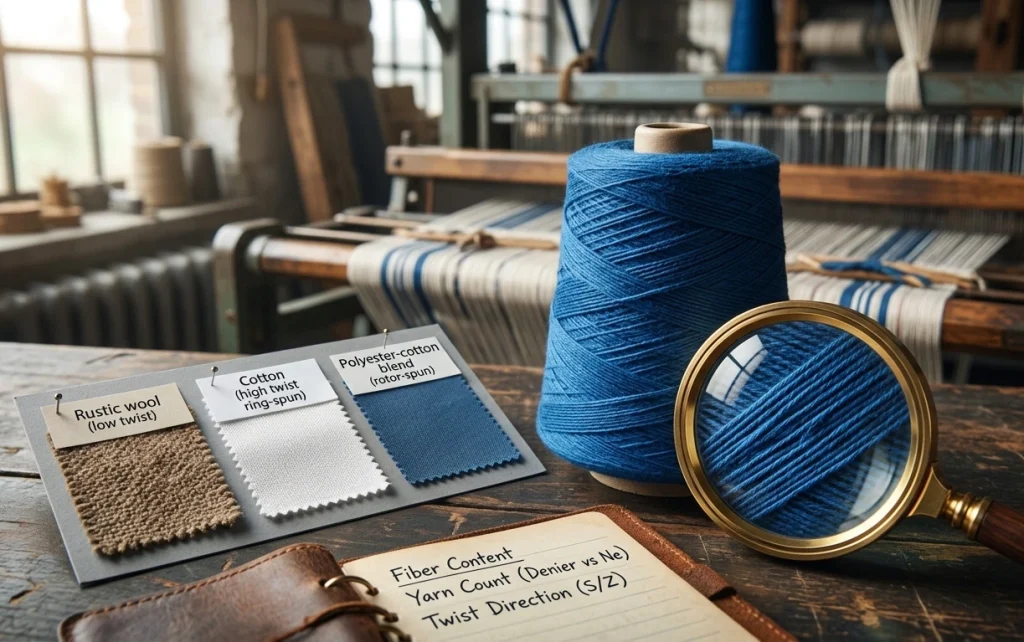
The first step is deciding what the yarn is actually made of. This is generally split into three categories:
- Natural Fibers: Cotton (breathable), Silk (lustrous), and Wool (insulating). These appeal to eco-conscious consumers but can have natural inconsistencies.
- Synthetic Fibers: Polyester (durable), Nylon (elastic), and Acrylic (wool-like). These offer high performance and consistency at a lower price point.
- Blends: Combining fibers (e.g., Poly-Cotton) allows manufacturers to capture the best of both worlds—the comfort of natural fibers with the durability of synthetics.
2. Understanding Yarn Count and Density
Yarn count refers to the thickness of the yarn. Choosing the correct count is vital for achieving the desired fabric weight.
| System | Best Used For | Logic |
| Indirect (Ne/Nm) | Cotton, Wool, Linen | The higher the number, the finer the yarn. |
| Direct (Denier/Tex) | Synthetics, Silk, Filament | The higher the number, the thicker the yarn. |
Pro Tip: For high-speed knitting machines, consistency in yarn count is more important than the count itself to prevent needle breakage.
3. Twist: Strength vs. Softness
The “twist” is the number of turns per inch (TPI) given to the yarn. This simple mechanical factor changes everything:
- Low Twist: Results in a soft, lofty, and fuzzy yarn. Great for fleece or towels, but prone to pilling.
- High Twist: Creates a hard, smooth, and strong yarn. Ideal for crisp fabrics like gabardine or high-performance activewear.
- Twist Direction: Pay attention to S-twist (left) vs. Z-twist (right). Most single-end yarns used in large-scale weaving are Z-twist to prevent untwisting during high-tension processing.
4. Spinning Method and Surface Quality
How the yarn is spun affects the “hairy” quality of the fabric surface:
- Ring Spun: The gold standard for strength and softness. It produces a fine, high-quality yarn but is slower to manufacture.
- Open-End (Rotor): Much faster and cheaper to produce. It’s ideal for denim and heavier knits but can feel slightly coarser.
- Vortex/Air-Jet: Offers the best resistance to pilling and a very clean surface, making it popular for modern athleisure.
5. Final Checklist for Procurement
Before signing off on a bulk yarn order, evaluate these four “hidden” factors:
- Colorfastness: Will the yarn hold dye during the finishing process?
- Elongation: Does the yarn have enough “give” to survive the tension of a high-speed loom?
- Moisture Content: Ensure the yarn has been stored in a climate-controlled environment to avoid weight discrepancies and brittle fibers.
- Sustainability Certification: Are your clients looking for GOTS (Organic), GRS (Recycled), or Oeko-Tex standards?
Conclusion
Selecting the right yarn is a balancing act between budget, machine compatibility, and the end-user’s experience. By mastering the relationship between fiber type, twist, and count, you can optimize your manufacturing process and deliver a superior textile product.
What specific type of garment or textile product are you currently planning to manufacture?


